



Microbiological Environmental Testing Services
Mold and Bacteria Testing Services
IAQ is one of the leading Indoor Environmental Quality consultancy firms in Singapore who are able to offer a full range of microbial services. We are operating our own dedicated microbiological testing laboratory with a professionally experienced team. At IAQ, we are able to determine the level of airborne microbes present in the indoor environment. In addition to that, we can also identify the types of microorganisms residing in the indoor environment. This process, known as speciation, is crucial in determining the development of the remediation protocol which will be applicable in the mitigation phase and is extremely valuable when assessing possible health effects or damage, that exposure to these microorganisms might have caused to occupants and/or building materials.
Why Test for Mold and Bacteria?
The indoor environment is a very complex environment. Indoor Air Quality is a critical measuring tool to ensure that our indoor environment is pleasant, safe, hygienic and healthy. Additionally, the presence of several types of microorganisms dispersed in the air at elevated levels can be the leading cause of several diseases and should also be taken into account.
Airborne Bacteria Testing for Indoor Environment
Humans are a significant source of indoor bacteria. The majority of bacteria that belong to the normal microflora of the human skin are repeatedly emitted into the immediate surroundings of humans and may accumulate indoors. Bacteria that can be identified in indoor air are Micrococci, Staphylococci, Streptococci, etc. Bacteria actively growing or accumulating in the indoor environment may cause health effects and may require specific actions to control growth and prevent the exposures.
Airborne Mold Sampling for Indoor Environment
Mold or interchangeably spelled as “mould” are ubiquitous organisms. They may be brought into buildings via building materials or occupants. They may also penetrate buildings through active or passive ventilation. Mold growth requires moisture (dampness), organic matter as “food source” and temperature. These microorganisms are commonly invisible to the human eye and can spread through the indoor environment to high levels before being noticed. Examples of common mold are Aspergillus sp, Penicillum sp, Cladosporium sp, etc.
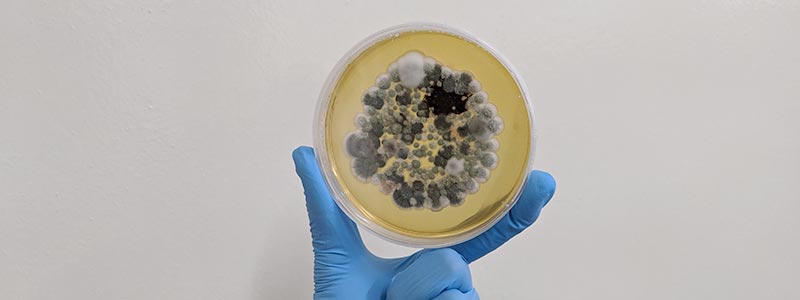
Every building irrespective of its construction, contains and provides harborage to large numbers of diversified micro-organisms. In any indoor environment, the microbial activity would normally remain at innocuous levels. Microorganisms can live silently and go unnoticed until the prevailing environmental conditions allow them to proliferate to hazardous or even life-threatening levels. At this point, several mild symptoms will manifest in individuals and can be a clear indication of a poor health environment.
Therefore, it is clear that there is a significant need to pro-actively monitor and understand the impact that the indoor environment has on its occupants and building materials so that we can prevent widespread contamination.
Health Effects of Microorganisms In Indoor Environment
Indoor air pollutants can generate immense effects on human health. The effects are either respiratory issues or allergic reactions which can be instigated by the exposure to different biological agents that are identified in indoor air. Other symptoms may include headache, fatigue, coughing and sneezing.
IAQ Field Testing Services
Bioaerosol Air Sampling In Indoor Environment
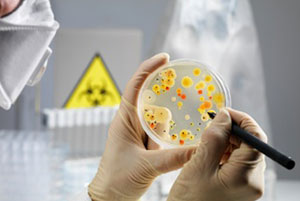
The bioaerosol air sampling is one of the active sampling techniques. It is a simple way to initially estimate the extent of contamination in the indoor environment.
Bioaerosol testing is performed with a MAS-100 NT air sampler loaded with Malt Extract Agar (MEA) plates for fungal retrievals and Tryptone Soy Agar (TSA) for bacterial retrievals. The MAS-100 NT air sampler is calibrated to draw 100litres of air per minute and trap the microorganisms onto the plate. The values are reported as Colony Forming Units (CFU) per cubic meter of air.
These results are valuable when determining the next course of actions which can either be investigative sampling or implementation of treatment procedures.
Surface Sampling Using Bio-Tapes & Swabs
Surface sample will be collected from suspected visual mold growth or from areas that presented visible stains using either bio-tape slides or swabs. Typically, when the infestation becomes visible, the spores are well fixated on fabric, carpets, walls, and roofs and can present layers of growth that are hard to detect visibly. While some spores will be gathered through air sampling, it might be the case that other species are growing within the microbiome and are only identified through surface sampling, due to their various settling and fixating mechanisms.
Bio-Tape Sampling for Mold Identification
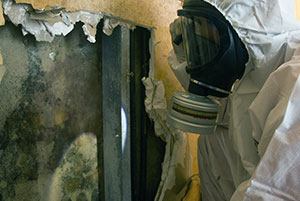
The slide is placed over the area of visible or suspected mold growth and the surface of the slide is lightly pressed. After collection, the Bio-tape slide is stained with lactophenol cotton blue. The Bio-tape slide will be then observed under the microscope for further analysis.
Differing from simple tapes, the Bio-tape serves as a quick indication of the types of mold present. Some species are symbiotic and reproduce quite well together, while others are competitive and will react to threats by releasing a higher level of toxins.
Swab Sampling for Bacterial and Fungal Analysis
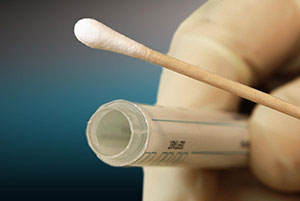
Generic swab samples can be collected from areas suspected of bacterial or fungal contamination or from areas that present visible stains. Swab samples can then be analyzed for total viable counts or specific indicator organisms for food spoilage or sewage contamination. Depending upon the results, further focused testing and analysis can be targeted to provide more accurate diagnostic results.
In fact, swabs are quite helpful in sampling in areas that are harder to reach and that are not susceptible to simple detachment such as seen in flat surfaces. Swabs will be applied typically in the analysis of cushions, sofa’s, cracks under wallpaper and other tight spots.
IAQ Laboratory Services
Mold Species Identification
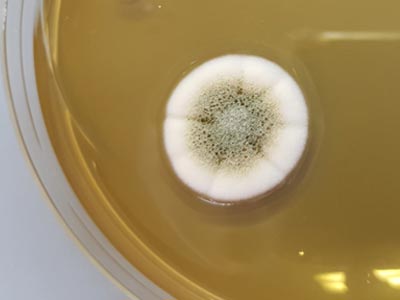
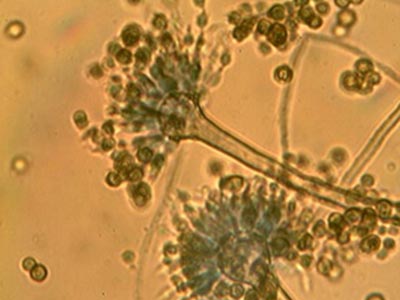
Molds and bacteria above certain levels are recognized as health hazards, having been associated with health problems such as allergies, infection and mycotoxin poisoning. Being able to definitively identify the microorganisms present within a building and tracing to the root cause or source is an absolute pre-requisite to understanding the problems and then working on implementing a species-specific remediation strategy. At IAQ, we take a very efficient and professional approach to identify the types of microflora in the indoor environments.
Precise microbial identification requires in-depth technical knowledge of the subject matter, highly qualified and experienced staff that is able to provide a complete report with detailed information on the level of infestation, types of species present and the associated health effects.
People also ask
- What is Mold commonly known as?

- How do mold grow?
- What is Mycotoxins?
- What is Toxic mold?
- Why do air sampling for mold inspection?

